Partners in Parenting Plus – Education (PiP-Ed+)

PiP-Ed+ is an evidence-based online program designed to help parents and carers support their teenager's mental health and school attendance. The program provides parents with practical strategies to respond to their teen's school distress (sometimes called ‘school refusal’, ‘school can't’ or ‘emotionally based school avoidance’), anxiety, and/or depression. It also covers other common parenting challenges, such as communication, managing strong emotions, boundaries, conflicts, and staying involved in their teen's life while they navigate their independence.

Express Interest
A note on language

We use the term ‘school refusal’ to describe difficulties attending or remaining at school because of emotional distress related to school attendance. We recognise that this term is not accepted by everyone as the best way to describe the problem. You may see other terms used, including ‘school can't’, ‘school avoidance’ or ‘emotionally based school avoidance’. For simplicity, we use ‘school refusal’ throughout the program. We acknowledge that school attendance is influenced by many interacting factors, including the young person's experiences, the school environment, and family, community, and other circumstances.

Introductory video

Watch this short video to learn more about the PiP-Ed+ program and research trial.

Evidence-based online program for parents

PiP-Ed+ is based on:

  • High-quality research evidence and international expert consensus
  • Co-design with parents and teens with lived experience of school refusal
  • Co-design with education sector professionals
5000+ families helped

Our research trials with over 5,000 Australian parents show that PiP is effective, with benefits for both parents and their children and teens.

If you’d like more information about the evidence for our programs, feel free to contact us.
Who is the program for?

PiP-Ed+ is for parents and carers of teenagers aged 12–15 years who:

  • are having difficulty attending school due to emotional distress (sometimes called ‘school refusal’, ‘school can't’ or ‘school avoidance’);
  • have attended less than 18 of the past 20 school days (excluding school holidays);
  • would like to support their child to re-engage in formal education settings (i.e. attendance at a physical or virtual school, rather than home-schooling); and
  • can read, write, hear, and speak English.

To be eligible to take part in the program, you will also need to:

  • have regular contact with your teenager;
  • live in Australia;
  • be able to read, write, hear, and speak English (both parent and teen);
  • have regular internet access (including email) and a device that supports videoconferencing (e.g. Zoom); and
  • be available to attend regular coaching sessions (via Zoom) during business hours.
Is there anyone who can't take part?

The PiP-Ed+ program and research trial is not suitable for every family. You may not be eligible to participate if any of the following apply:

  • Your teenager is not attending school for reasons other than emotional distress (e.g. because of illness or truancy).
  • Your family situation or your teenager's mental health difficulties require more immediate or intensive support than the program can provide. This may include intellectual disability, difficult family situations (e.g. family violence), serious mental health difficulties or other significant challenges that are likely to make it difficult for you to take part in the program.
  • You are already receiving other professional parenting support (e.g. parenting program, family therapy), or your teen is currently participating in family therapy, another parenting program, or other mental health treatments that may contradict the PiP-Ed+ program.

Our team will talk with you about your family's circumstances to help determine whether the program and research trial is likely to be a good fit for you.

Is PiP-Ed+ treatment for my teenager?

PiP-Ed+ is not a treatment program for teenagers. It is a program for parents, designed to help parents and carers to support their teenager. It is also not therapy for parents. We encourage:

  • teenagers to access professional mental health support while parents complete the program;
  • parents to seek their own support, if needed.
What does the program involve?

There are two components to the PiP-Ed+ program:

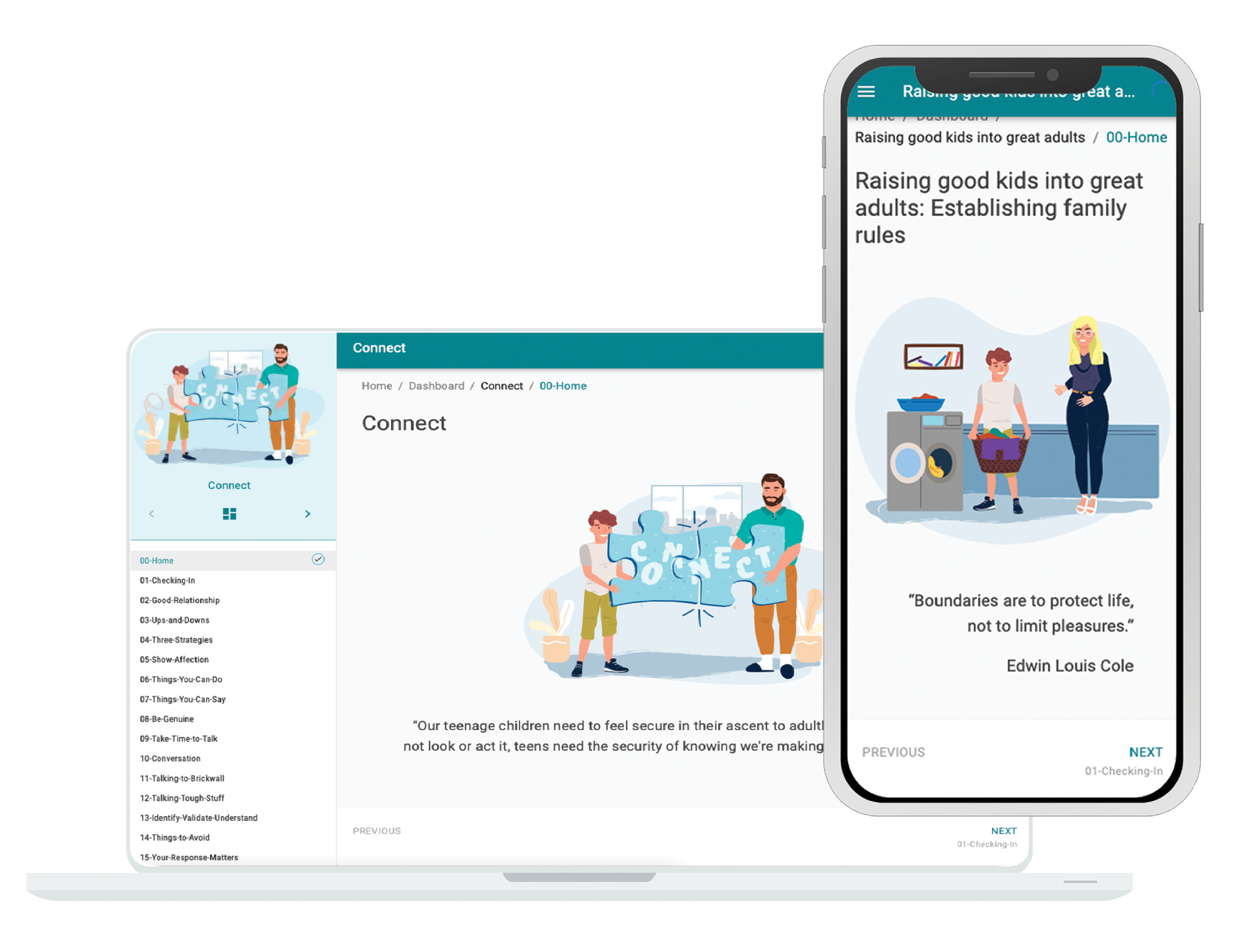
  • A series of up to 13 interactive online modules covering a range of topics related to supporting teenage mental health and school attendance;
  • Up to 9 weekly one-on-one coaching sessions with a PiP-Ed+ coach, delivered via videoconference (Zoom).
What is the research trial for?

PiP-Ed+ is being offered as part of a research trial to help us understand how effective the program is.

If you participate, you will first complete some online surveys. After this, you will be randomly allocated to either:

  • Immediately start the PiP-Ed+ program (including online modules and weekly coaching sessions); or
  • Start the program after a 7-month waiting period.

The waitlist helps us compare outcomes between groups so we can properly evaluate the program. This allocation is completely randomised using online software. Once you have been allocated, we cannot change when you are able to start the program.

All parents will be invited to complete four online surveys over an 11-month period to help us evaluate the program. If you choose to participate, we ask that you commit to completing these surveys. As a thank you for your time, you will receive e-gift vouchers after completing the surveys.

Will my teenager also need to take part?

PiP-Ed+ is a program for parents, so only parents take part in the program itself. To help us evaluate the program, we are also inviting teenagers to complete four online surveys (about 15–25 minutes each). The surveys ask about mental health, wellbeing, and confidence to attend school.

Your teenager's participation is entirely optional, and we will only invite them with your consent. If you prefer we don't contact your teen, or if they choose not to participate, this will not affect your eligibility for the program.

We recommend discussing the research with your teen, so they have an opportunity to ask questions and understand what it involves. Teenagers who complete the surveys will receive a $25 e-gift voucher for each survey they complete (up to $100 total).

Responsive
Fits your lifestyle
  • Only 20-30 minutes per online module
  • Attend weekly coaching sessions via Zoom, from anywhere in Australia
  • Entirely online
  • Both desktop and mobile versions available
Fun and interactive
  • Learn practical strategies through interactive activities and video-based scenarios
  • Hear from teenagers about a range of topics, including how they'd like their parents to talk with them about school, how parents and school staff can work together to support them, when parents argue and how they'd like their parents to support them, and how they like to spend time together
  • Apply your module learnings through weekly goals
Free to join
Joining PiP-Ed+ won't cost you a cent! You will receive a $35 e-gift voucher each time you complete a survey ($140 total). If your teen also takes part, they will receive a $25 e-gift voucher for each survey they complete (up to $100 total).
Interactive
Feedback
Get personalised feedback

Your journey starts with an online assessment. This allows us to give you personalised feedback about your parenting strengths, further tips to support your teen, and we'll recommend specific online modules for you.

Access up to 13 interactive modules

We will recommend modules for you to complete, but you can choose the modules you want to do, and the order in which you do them.

It can be hard for parents to tell whether changes in their teen's behaviours are a normal part of adolescence, or a sign of a mental health problem. In this module, we'll take a closer look at depression and anxiety disorders in teens, including how you can support your teen's mental health now and into the future.

Connect is about empowering you to change your behaviour so you can positively influence your teenager. We'll talk about ways to build your relationship and communication with your teenager.

We all feel anxious at times, and it's important for teenagers to learn to manage their everyday anxiety. 'From surviving to thriving: Helping your teenager deal with anxiety' will talk about ways that you can support your teenager to cope with the fears and worries they will inevitably face.

When teens refuse to attend school, the problem can be more complex than it initially appears. This module will help you develop a solid understanding of the problem, to equip you with the knowledge and skills needed to support your teen to engage with school.

To give your teen the best chance of overcoming school refusal, it's essential to work together with your teen, the school, and any other professionals involved. This module provides advice on how you can work together effectively to support your teen.

Regular acts of self-care can help to relieve stress, reduce the likelihood of carer fatigue or burnout, and enable you to keep caring for others. This module provides some strategies you can use, which other parents and carers have found helpful.

Teenagers need the adults around them to set clear boundaries and expectations for their behaviour. This module will help you to establish clear expectations that your teen is likely to follow.

Parents play an important role in helping their teenagers learn to manage conflict. 'Calm versus conflict' aims to help you manage conflict at home, to create a safe and supportive environment for your teenager.

As teenagers begin to place greater emphasis on their peers, parents still play an important role in helping their teens to develop social skills. This module helps you to support your teen to develop social skills across a variety of settings.

'Nurture roots' is all about finding a balanced way to stay involved in your teenager's life while also allowing them to 'leave the nest' and develop age-appropriate independence.

Getting enough sleep, eating well, being physically active, and not using alcohol or drugs can protect our physical and mental health. This module is all about helping you to support your teenager to develop good health habits.

Problems are a part of life. As teenagers mature, they need to learn strategies to tackle the problems they will face throughout their life. 'Partners in problem solving' focuses on how you as a parent can support your teenager to develop good problem-solving skills.

It is normal for a teenager's mental health to fluctuate. Maintaining the Gains is about how you can support your teen to continue looking after their mental health, even when challenges or setbacks arise.

Contribute to important research on parenting & adolescent mental health by Monash University

Powered by Induk, an Open Source platform.

PiP content is Creative Commons BY-SA 4.0.